| Bahrain
Country Reports on Human Rights Practices - 2007
Released by the Bureau of Democracy, Human Rights, and Labor
March 11, 2008
Bahrain is a monarchy with a population of approximately 725,000, approximately
430,000 of whom are citizens, according to official figures. King Hamad Bin Isa
Al-Khalifa is the head of state and all branches of government. The king
appoints a cabinet of ministers, half of whom are members of the Al Khalifa
royal family. The 2002 constitution reinstated a legislative body with one
elected chamber, the Council of Deputies, and one appointed chamber, the Shura
Council. All political societies participated in the November and December 2006
parliamentary and municipal elections. Trained local observers did not report
significant problems during the elections, although there were allegations that
the government manipulated general poll center vote counts in some cases and
gerrymandered political districts. Civilian authorities generally maintained
effective control of the security forces.
Citizens did not have the right to change their government. The government
restricted civil liberties, including freedoms of press, speech, assembly,
association, and some religious practices. Although citizens were not able to
form political parties, the law authorized registered political societies to run
candidates and participate in other political activities. The judiciary lacked
independence, and corruption was a problem. Domestic violence against women and
children was common, as was discrimination on the basis of gender, religion,
sect, and ethnicity. Trafficking in persons and restrictions on the rights of
expatriate workers remained problems. The Shi'a majority population was
routinely discriminated against.
RESPECT FOR HUMAN RIGHTS
Section 1 Respect for the Integrity of the Person, Including Freedom
From:
a. Arbitrary or Unlawful Deprivation of Life
There were no reports that the government or its agents committed politically
motivated killings.
However, on December 17, a 31-year-old man, Ali Jasem, died after participating
in a protest where Shi'a activists clashed with security forces. Although the
official autopsy reported he died of “acute cardiovascular and respiratory
collapse,” local human rights observers alleged his death was linked to inhaling
tear gas used to disperse demonstrators.
b. Disappearance
There were no reports of politically motivated disappearances.
c. Torture and Other Cruel, Inhuman, or Degrading Treatment or Punishment
The constitution prohibits such practices; however, there were reports during
the year that security forces employed them.
According to a June 1 Human Rights Watch (HRW) report, security forces severely
beat Ali Saeed Al-Khabbaz and Hassan Yousif Hameed after arresting them on May
21 while breaking up a gathering near the house of political activist Hassan
Mushaima. According to HRW, on May 29, Ministry of Interior (MOI) officials
informed the two men's families that they were in a military hospital. The
hospital declined to give the families any information about their injuries. On
May 29, the Arabic daily Al-Wasat published photos of the men depicting swelling
and bruising on their faces and heads. According to HRW, Hameed sustained a
broken jaw. On June 7, both men were released following a meeting between the
minister of the interior and Secretary General of Al-Wifaq Islamic Society
Shaikh Ali Salman. There was no investigation into the alleged abuses.
Following protests that occurred on December 18 and 20, security forces arrested
dozens of protestors and detained them in the Adliyeh detention center.
According to HRW, some detainees were reportedly tortured and abused in prison
by judicial interrogators that beat and electrocuted them. One detainee, Maytham
Badr al-Shaykh, reported that interrogators sexually assuaulted and electrocuted
him. Officials denied the allegations of abuse.
Human rights activists, including the dissolved Bahrain Center for Human Rights
(BCHR), continued to demand government accountability for alleged acts of
torture committed prior to 2001.
Prison and Detention Center Conditions
Prison and detention center conditions generally met international standards.
Unlike in previous years, the government did not permit any visits by
international human rights observers.
In August 2006 the quasi-governmental Supreme Council for Women (SCW) conducted
a visit of the country's women's prison in Isa Town. There was no publicly
released SCW report on the visit.
In 2005 a Bahrain Human Rights Society (BHRS) team made two visits to Jaw
Prison, the country's men's prison. BHRS conducted interviews with staff and 56
inmates. There were reports from some inmates of mistreatment in the detention
section where new inmates are first held before being assigned a permanent cell.
Although International Committee of the Red Cross (ICRC) officials visited the
country during the year, they did not request prison visits. Bahrain Red
Crescent Society officials reported that ICRC officials had not visited prisons
since the release of all political prisoners in 2000.
d. Arbitrary Arrest or Detention
The constitution prohibits arbitrary arrest and detention, and the government
generally observed these prohibitions.
Role of the Police and Security Apparatus
The MOI is responsible for public security. It controls the Public Security
Force and the extensive security service, which are responsible for maintaining
internal order. The Bahrain Defense Force is responsible for defending against
external threats and also monitors internal security. The security forces were
generally effective in maintaining internal order.
A widespread lack of transparency made corruption difficult to assess. The press
reported that authorities jailed and/or fined law enforcement officials for
misconduct, most often for accepting bribes.
During the year there were no known instances of police officers punished for
committing human rights abuses. There is no mechanism in place for investigating
security force abuses. In practice the MOI responded to allegations of abuse and
public complaints by establishing ad hoc investigation committees. There is no
evidence that these committees have ever issued public reports of their
findings.
Arrest and Detention
In order to apprehend felony suspects, the police must convince the judge based
on evidence to issue an arrest warrant. Police and security forces must transfer
suspects to the public prosecutor's office immediately, and generally respect
that requirement in practice. Within seven days of arrest, a detainee must
appear before a judge in the public prosecutor's office. If the judge decides
the suspect is a flight risk or a danger to society, a maximum additional 45
days detention is permitted while the investigation is carried out. This process
may continue through subsequent reviews by different judges, but pretrial
detention may not exceed six months. Judges may grant bail to a suspect and do
so regularly.
The 2006 counterterrorism legislation allows the public prosecution to detain a
terrorism suspect for a five-day period. Upon request, the public prosecutor may
extend this period based on the needs of the investigation for up to an
additional 10 days. At the end of this period, the detainee must be transferred
to the public prosecution and questioned within three days. The public
prosecutor must then decide to issue a detention order or to release the
detainee. The detention order may not exceed 60 days.
Detainees were generally allowed prompt access to visiting family members.
Detainee access to attorneys was often restricted in the early stages of
detention; attorneys must seek a court order to confer with clients. The state
provided counsel to indigent detainees. After conviction attorneys required the
prison director's permission to visit a client in jail.
On May 18, the king ordered the public prosecution to drop all charges against
Hassan Mushaima, head of the Haq Movement; Abdulhadi al-Khawaja, Director of the
dissolved BCHR; and Shaker Abdulhussain, a Shi'a activist. Police arrested the
men on February 2, and prosecutors charged them with inciting hatred,
encouraging law-breaking, and publishing false news. The arrest sparked riots in
several Shi'a villages.
On September 30, according to the BHRS, police arrested Khalid Nour and Hussain
al-Ali for taking an illegal commission and held them for 48 hours before
granting access to an attorney. At year's end, the authorities had not announced
charges against either Nour or al-Ali, and they remained in detention.
On December 24, according to the Associated Press, Hafez Hafez, a lawyer for
some of the detainees who were arrested by police following the December 20
clashes between Shi'a protestors and security forces, reported that the
government refused to allow the detainees access to legal counsel or family
members.
Amnesty
On February 25, a royal pardon released and dropped all charges against Mohamed
al-Sahlawi and Hussein al-Habash. Authorities had charged them with promoting
change of the system of the state through illegal means and possessing
publications containing false information that "would cause disruption to public
security and damage the public interest" in connection with plans to distribute
leaflets calling for a boycott of the 2006 elections.
On August 1, the government initiated an amnesty for illegal workers. On
December 31, the amnesty was extended until Jan 31, 2008. Under the terms of the
amnesty, any expatriate living or working illegally in the country may legalize
his or her status without penalty or return to his or her home country without
paying fines.
e. Denial of Fair Public Trial
The constitution provides for an independent judiciary, but the government did
not respect judicial independence in practice. Courts were subject to government
pressure regarding verdicts, sentencing, and appeals. There were allegations of
corruption in the judicial system. The constitution provides that the king
appoint all judges by royal decree. The king also serves as chairman of the
Supreme Judicial Council, the body responsible for supervising the work of the
courts and the public prosecution.
The legal system is based on a mix of British civil law, common law, Shari'a
(Islamic law), and traditional laws. The judiciary is organized into two
separate branches: the civil law courts and the Shari'a courts.
The civil law courts, through their criminal and civil branches, adjudicate all
civil and commercial cases, criminal cases, and personal status cases involving
non-Muslims. The courts of minor cases (the lower courts and the Court of
Execution) have one judge with jurisdiction over minor civil, commercial, and
misdemeanor cases. The high civil courts have three judges with jurisdiction
over larger civil and commercial cases, felonies, and personal status cases
involving non-Muslims. The Civil High Court of Appeal has a panel of three
judges and hears appeals. Both the civil and criminal court systems have a
supreme court of appeal, and a court of cassation, the final appellate court.
The Shari'a courts have jurisdiction over personal status cases involving
citizen and noncitizen Muslims. There are two levels: the Senior Shari'a Court
and the High Shari'a Court of Appeal. At each level is a Sunni Maliki Shari'a
court with jurisdiction over all personal status cases brought by Sunni Muslims
and a Ja'afari Shari'a court with jurisdiction over cases brought by Shi'a
Muslims. The High Shari'a Court of Appeal is composed of a minimum of two
judges. In the event of a disagreement, the Ministry of Justice (MOJ) provides a
third judge, and the decision is based on a majority vote. There are 11 judges
in the Sunni Maliki Shari'a courts and 12 judges in the Shi'a Ja'afari Shari'a
courts.
The Constitutional Court rules on the constitutionality of laws and statutes.
The court's membership consists of a president and six members, all appointed by
the king. These seven judges serve nine year terms and cannot be removed before
their terms expire. The court's determination is final and binding, according to
the constitution.
The Bahrain Defense Force maintains a separate court system that only tries
military personnel accused of offenses under the Military Code of Justice. The
MOI has a similar system for trying police officials. There were no reports of
either court considering cases involving civilian, common criminal, or security
cases during the year.
Trial Procedures
According to the constitution, defendants are presumed innocent until proven
guilty. Civil and criminal trial procedures provided for an open trial. Juries
are not used. By law, defendants have the right to prompt consultation with an
attorney of their choice. The state provided counsel to defendants who could not
afford to hire an attorney. Defendants are present during trial proceedings, and
they have the right to present witnesses and evidence on their behalf and
question witnesses against them. No law governs defendants' access to
government-held evidence, and the government often reviewed evidence prior to
defendants' access to it. Women's legal rights vary according to Shi'a or Sunni
interpretations of Islamic law.
Political Prisoners and Detainees
There were no reports of political prisoners or detainees.
Civil Judicial Procedures and Remedies
Citizens may bring civil suits before the court seeking cessation of or damages
for human rights violations; however, there was impunity for alleged torturers
that the government maintained was granted by the 2001 general amnesty.
f. Arbitrary Interference with Privacy, Family, Home, or Correspondence
The constitution provides for personal freedom and freedom from arbitrary
interference with privacy, home, and correspondence except under the provisions
of the law and under judicial supervision; however, the government continued to
infringe on citizens' right to privacy. Telephone calls, e-mail, and personal
correspondence remained subject to monitoring. Police informer networks were
extensive and sophisticated.
Section 2 Respect for Civil Liberties, Including:
a. Freedom of Speech and Press
The constitution provides for restricted freedom of speech and of the press, but
the government limited the exercise of these rights in practice. Both censorship
and self-censorship took place.
The 2006 association law forbids any speech or discussion infringing on public
order or morals. In private settings, individuals openly expressed critical
opinions regarding domestic political and social issues. There was considerable
freedom of expression on the Internet, in letters to the editor, and
occasionally on state run television call in shows.
The government enforced at its discretion the 2002 suspended press law, which
provides for restricted freedom of speech and press. The law provides for prison
sentences of at least six months for criticizing Islam or the king or inciting
actions that undermine state security. The law allows fines up to $5,300 (2,000
dinars) for 14 other offenses, including publicizing statements issued by a
foreign state or organization before obtaining the consent of the minister of
information; publishing any news reports that may adversely affect the value of
the national currency; reporting any offense against the head of a state that
maintains diplomatic relations with the country; or publishing offensive remarks
towards an accredited representative of a foreign country because of acts
connected with the person's position.
There was no government-owned print media, but the Ministry of Information
exercised considerable control over local privately-owned print media. The
government generally did not restrict press coverage of international issues and
local issues focusing on opposition politics and economic and commercial issues.
However, government censorship took place. Representatives from the Ministry of
Information actively monitored and blocked local stories on sensitive matters,
especially those related to sectarianism, national security, or criticism of the
royal family, the Saudi royal family, and judges.
Journalists also practiced widespread self-censorship. According to some members
of the press, government officials contacted editors directly and asked them to
stop writing about certain subjects or asked them to not publish a press release
or a story. In the runup to the November 2006 parliamentary elections, there
were reports that the government paid journalists to represent it favorably. In
addition, the Press and Publications Directorate at the Ministry of Information
was responsible for reviewing all books and publications that were ready to go
to print and issuing printing licenses allowing the authors of these books to
publish them.
In October Ghada Jamsheer, a women's rights activist and president of the
Bahrain Women's Petition, reported that government officials effectively banned
her from appearing in the media, due to her calls for the dissolution of the
Supreme Council of Women in April. Media officials and editors-in-chief claim
there is no ban on her in the media.
On March 18, the chairman of the Bahrain Journalists' Association and
editor-in-chief of Al-Ayam newspaper, Isa al-Shaiji, filed a complaint at the
public prosecutor's office against Member of Parliament (MP) Mohammed Khalid,
alleging that Khalid insulted him and his family during a debate in the Council
of Deputies on February 20. In May the Legislative Committee refused to withdraw
Khalid's parliamentary immunity, effectively preventing the case from
proceeding.
On April 19, authorities convicted in absentia Dr. Salah al-Bandar and sentenced
him to four years in prison and a $265 (100 dinars) fine. In September 2006
authorities deported al-Bandar and accused him of seizing official government
documents and stealing private checks, after he distributed a report claiming a
group of high-level government officials attempted to manipulate the 2006
election process. At the time, al-Bandar, a British citizen, was an advisor to
the president of the Central Informatics Organization, which originally had
responsibility for conducting elections. In October 2006 the High Criminal Court
issued an injunction against the publishing of any news, commentary, or other
information related to the report or the legal case against al-Bandar, including
on the Internet. The gag order remained in effect at year's end.
On August 29, a prosecutor summoned Isa al-Shaiji for questioning regarding a
May 10 complaint filed by Egyptian Islamic Brotherhood preacher Wagdy Ghunaim,
who alleged that al-Shaiji published articles critical of Ghunaim's views. The
prosecutor released al-Shaiji on bond the same day. On November 14, the
government withdrew Ghunaim's residency permit. Ghunaim then hired a proxy to
continue pursuit of the case in his absence. At year's end, the case was still
pending.
The government owned and operated all local radio and television stations and
maintained control over the selection of the locally-based Al—Jazeera
correspondent. Some public demonstrations were not covered on government-owned
television.
Radio and television broadcasts in Arabic and Farsi from countries in the
region, including by satellite, were received without interference. Satellite
television systems provided unimpeded access to international broadcasts.
Internet Freedom
The government restricted use of the Internet. The government is a major
shareholder in the Bahrain Telecommunications Company (Batelco), the country's
principal telecommunications company. Batelco prohibited user access to Internet
sites considered to be antigovernment or anti Islamic. E-mail use was reportedly
monitored. The government has invoked the press code to justify the questioning
of some journalists and bloggers.
The government attempted to block local access to numerous Web sites, including
local Web logs and chat sites; human rights Web sites; sites containing
information about Arab Christians; and the Wa'ad political society's Web site.
Public discussion of blocked Web sites is widespread. Most residents have access
to the Internet in the home, workplace, or Internet cafés. The number of
Internet users increased by 32.7 per cent in 2006, and at year's end, there were
approximately 61,000 Internet subscribers. Most low-wage laborers use Internet
cafés. Many users were able to access blocked sites through alternate servers.
The government regularly monitored Web sites and blogs maintained by local
activists.
In late 2006 the government blocked some Web logs until their authors removed
any references to the case of Dr. Salah al-Bandar.
After the November and December 2006 elections, a number of local bloggers were
blocked on the Internet for commenting upon election irregularities.
Under the law, Web site administrators face the same libel laws that apply to
print journalists, and Web masters are held jointly responsible for all of the
content posted on their Web sites or chat rooms.
Academic Freedom and Cultural Events
The constitution provides for academic freedom, although the government limited
this freedom in practice. Academics avoided contentious political issues. There
was a disproportionately high number of Sunni professors in universities. The
university's hiring and admissions policies favored Sunnis and others who were
assumed to support the government. The proportion of Shi'a students was
estimated to be close to the approximately 70 percent of Shi'a in the general
population, although there are proportionately fewer Shi'a professors.
On November 26, press reports indicated that the government began granting
licenses for publication of several books pertaining to Islamic history, modern
Bahraini history, and democracy for which licenses were previously denied.
b. Freedom of Peaceful Assembly and Association
Freedom of Assembly
The constitution provides for the right of free assembly, but the law restricts
the exercise of this right.
The July 2006 amendments to the association law codified restrictions on where
and when public gatherings or demonstrations can be held. According to the law,
organizers must submit requests for public gatherings or demonstrations to the
MOI with at least 72 hours' advance notice. The request must be signed by three
law-abiding citizens from the area in which the gathering is to take place. If
there is no response to the request, the gathering may proceed. According to the
law, the head of public security is required to notify the organizers of any
public gathering about any changes to the request (such as location, time, or
route) at least 48 hours prior to the event. Organizers of an unauthorized
gathering may be held responsible for any damage to public or private property,
in addition to prison sentences ranging from three to six months.
The law prohibits any public gatherings or demonstrations near hospitals,
airports, commercial centers, or facilities designated to be security-related by
the MOI. Public gatherings and demonstrations are not permitted after 11:00 p.m.
or before 7:00 a.m. without written permission from the head of public security
or his deputy. The law states that funeral processions may not be turned into
political rallies and security officials may be present at any public gathering.
Government security forces intervened in some
demonstrations during the year.
On May 19, police used tear gas and rubber bullets to break up a seminar in
support of political activists Hassan Mushaima and Abdulhadi al-Khawaja. A
number of MPs and Sunni and Shi'a clerics were in attendance. Chairman of the
Wa'ad Society Ebrahim Sharif reportedly suffered minor injuries.
On May 21, police broke up a gathering near the house of political activist
Hassan Mushaima and arrested Ali Saeed al-Khabbaz and Hassan Yousif Hameed.
According to a June 1 HRW report, police beat Al-Khabbaz and Hameed while in
custody. On June 7, both men were released.
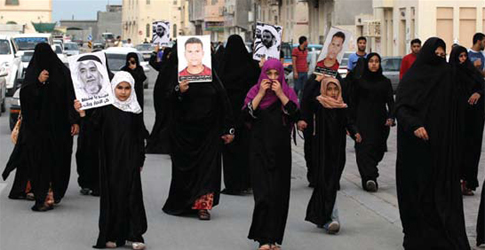
On December 17, security forces used tear gas and rubber bullets to disperse
Shi'a activists protesting alleged abuses by security forces during the 1980s
and 1990s. Demonstrators threw rocks and Molotov cocktails at the security
forces. Ali Jassem, 31-year-old Shi'a activist, died directly after the
protests. While the official autopsy reported that the man died of “acute
cardiovascular and respiratory collapse,” local human rights observers alleged
that he died as a result of inhaling the tear gas police used to disperse
demonstrators.
On December 18 and 20, street clashes between Shi'a protestors and security
forces also occurred. On December 20, according to press reports, approximately
500 protestors rallied over the December 17 death of Ali Jassem. The police
reported that some attacked and severely beat a policeman and stole his service
weapon. Protestors set a police vehicle on fire. Security forces responded with
tear gas and rubber bullets. According to Reuters, during and following the
clashes security forces arrested dozens of protestors, including opposition
political activists. At year's end, fifteen individuals faced charges of arson,
attempted murder of a police officer, and theft of a weapon.
The MOI reportedly told the owners of some venues to close their premises to
prevent meetings from occurring, primarily at mosques and "ma'tams," or Shi'a
community centers. The number of times this happened was unknown.
The government limited and controlled political gatherings. The law regulates
election campaigns and prohibits "election meetings" at worship centers,
universities, schools, government buildings, and public institutions. July 2006
amendments to this law lowered the voting age to 20 years of age and provided
for a 10 year loss of the right to vote or stand as a candidate for any person
sentenced to more than six months in prison for any crime. The electoral
restriction was not enforced in the November and December 2006 elections, as the
names of citizens sentenced for more than six months appeared on the voter
registration lists.
Freedom of Association
The constitution provides for the right of freedom of association; however, the
government limited this right in practice. Although the government does not
allow the formation of political parties, it authorized registered political
societies to run candidates and participate in other political activities.
Organized groups in the country are either civil society groups registered by
the Ministry of Social Development, political societies registered by the MOJ,
or labor unions registered with the Ministry of Labor (MOL). Each of these is
subject to registration requirements. Based on the proposed by-laws a new group
submits, the government decides whether its proposed activities are social or
political in nature. The law prohibits any activity by an unlicensed society and
any political activity by a licensed civil society. The law provides the
Ministry of Social Development the right to reject the registration of any
society if its services are deemed unnecessary, are already provided by another
society, are contrary to state security, or are aimed at reviving a previously
dissolved society.
The law requires all political societies to have bylaws signed by the founders
in order to register or maintain registration. The society's principles, goals,
and programs must not run counter to either the principles of Shari'a law or the
national interest as interpreted by the judiciary. The law requires that
societies must not be based on sectarian, geographic, or class identity and have
no military or paramilitary wing. When submitting an application for
registration, the political society must submit three copies of the bylaws
signed by all members, a list of all members and copies of their residency
cards, a financial statement identifying the society's sources of funding and
bank information, and the name of who will act as the society's proxy. Upon
receipt of an application, the MOJ has 45 days to request in writing any
necessary clarifications and/or statements and a total of 60 days to approve or
deny a political society's registration request. Approvals must be published in
the official gazette; denials must be accompanied by written statements that
detail reasons for the denial.
The law requires that any civil society organization submit two copies of the
bylaw of the association signed by all founding members; two copies of the
minutes of meetings of the founding committee stating names of founding members,
their professions, their place of residence, and containing their signatures;
and a registration fee. The law also requires that all members be 18 years of
age or older. The applications are required to be examined by the Ministry of
Social Development within 30 days. If after 60 days the ministry has not
announced the registration of a society, the application is considered rejected.
The society may file a complaint, which the ministry has 60 days to review. If
after 30 days the ministry has not responded, the association may refer the
application to the High Civil Court, which may annul the decision or refuse the
complaint.
The Ministry of Social Development has not allowed the National Committee for
the Unemployed to register as a civil society group because of the political
nature of its activities.
The Bahrain Youth Human Rights Society (BYHRS) also remained unsuccessful in
legally registering as a civil society organization. The society first applied
for registration in 2005. According to supporters of the group, authorities told
them that the society failed to meet one of the requirements of the 1989
associations act because some of its members were under 18 years of age. Members
of the society also speculate that government officials are enforcing the 1989
law to the letter because of ties between BYHRS and the now-dissolved BCHR.
On November 27, the president of the BYHRS, Mohammed Al-Moskati, appeared before
a lower criminal court judge to answer charges of "operating an unregistered
association" under the terms of the 1989 associations act. Al-Moskati asserted
that the act was inconsistent with Bahrain's international commitments as a
state party to the International Covenant on Civil and Political Rights. The
judge adjourned the trial until January 2008, and Al-Moskati was not taken into
custody. The BYHRS remained active at year's end.
c. Freedom of Religion
The Constitution states that Islam is the official religion and that Shari'a
(Islamic law) is a principal source for legislation. The constitution provides
for freedom of conscience, the inviolability of worship, and the freedom to
perform religious rites and hold religious parades and meetings, in accordance
with the customs observed in the country; however, the government placed some
limitations on the exercise of this right. Members of other religious groups who
practice their faith privately do so without interference from the government.
All other religious groups must obtain a permit from the Ministry of Justice and
Islamic Affairs (MOJIA) to operate and hold religious meetings. Depending on a
group's activities, it may also need approvals from the Ministry of Social
Development, the Ministry of Information, and/or the Ministry of Education.
The government continued to exert a level of control and to monitor both Sunni
and Shi'a Muslims, and there continued to be government discrimination against
Shi'a Muslims in certain fields. Historically there is evidence of
discrimination against Shi'a Muslims in recruitment for the country's military
and domestic security services. During the year the Ministry of Defense did not
recruit Shi'a for military service. During the year the MOI made increasing
efforts to recruit additional Shi'a into nonmilitary security agencies.
The Muslim population is approximately 70 percent Shi'a and 30 percent Sunni.
Non-Muslims account for approximately 1 percent of the population. There are
numerous Christian churches of different denominations, four Sikh temples, and
several official and unofficial Hindu temples located in Manama and its suburbs.
The only Jewish synagogue has been voluntarily closed since 1948.
The government funds, monitors, and closely controls all official religious
institutions, including Shi'a and Sunni mosques, Shi'a ma'tams (religious
community centers), Shi'a and Sunni waqfs (religious endowments), and the
religious courts.
During the year there were reports of clashes between the government and
elements of the Shi'a majority population, who were often critical of the
Sunni-dominated government. Problems continued to exist during the year,
stemming primarily from the government's perceived unequal treatment of Shi'a in
the country. Many of these incidents involved Shi'a protestors burning tires or
throwing Molotov cocktails at security forces. There were reports that the
security forces used rubber bullets and tear gas to break up some of these
demonstrations, which Shi'a protestors and other local human rights observers
alleged lead to the death of a 31-year-old man after a December 17 protest.
The government may appropriate or withhold funding to reward or punish
particular individuals or places of worship, although reports of this were not
common. There were no reported closures of mosques or ma'tams during the year;
however, in newer towns such as Hamad Town and Isa Town, which often have mixed
Sunni and Shi'a populations, there tended to be a higher number of Sunni
mosques. The Ministry of Islamic Affairs has not approved applications for the
Shi'a community to establish ma'tams in Hamad Town. As an alternative,
individuals in the Shi'a community have converted parts of their homes into
ma'tams.
Sunni and Shi'a waqfs made funding decisions for new mosque construction.
Although both Sunni and Shi'a waqfs were reportedly well-endowed and able to
fund mosque construction, new mosques were dependent upon government approval of
land allocation. The government's approval of land allocation for mosques was
not transparent and reportedly not proportionate to the Shi'a community's
relative population in the country.
There were reports that at year's end the government had not made a decision on
a 2005 request by one Christian church to form a second parish and obtain a
resident visa for the proposed permanent priest.
The government rarely interfered with what it considered to be legitimate
religious observances. During the year the government permitted public religious
events, most notably the large annual Shi'a holiday of Ashura, but police
closely monitored and limited these gatherings. The MOI's policy of providing
full media coverage of Ashura events continued this year. There were no
restrictions on the number of citizens permitted to make pilgrimages to Shi'a
shrines and to holy sites in Iran, Iraq, and Syria. The government monitored
travel to Iran and scrutinized carefully those who chose to pursue religious
study there.
Christian congregations and churches were registered with the government and
operated freely. The majority of those who attended Christian churches were
expatriates. Events at churches occurred frequently and were advertised
regularly in the English press, including the hosting of guest speakers from
many countries.
The law forbids election speeches in worship centers, but sermons often touched
upon political themes. Proselytizing by non Muslims is illegal and the
government prohibited anti Islamic writings; however, Bibles and other Christian
publications are displayed and sold openly in local bookstores that also sold
Islamic and other religious literature. Churches also sold Christian materials,
including books, music, and messages from Christian leaders, openly and without
restriction. Religious tracts of all branches of Islam, cassettes of sermons
delivered by Muslim preachers from other countries, and publications of other
religions were readily available. Christian pastors were permitted to provide
literature to Christian inmates and to prison libraries.
The MOJIA has repeatedly denied a Baha'i congregation a license to function,
although the group has not sought official recognition in many years. The Baha'i
community continued to gather and worship freely without government
interference. While the MOJIA views Baha'ism as blasphemous and an inauthentic
offshoot of Islam, some other government ministries included Baha'i as a
religion choice in "drop-down" computer menus for citizens applying for certain
government documents.
Societal Abuses and Discrimination
Discrimination against the majority Shi'a population remained a problem. Sunnis
received preference for employment in sensitive government positions and in the
managerial ranks of the civil service. The royal family is Sunni, and the
defense and internal security forces were predominantly Sunni. Although Shi'a
citizens held posts in these forces, with few exceptions, positions were not
high-ranking. In the private sector, Shi'a tended to be employed in lower paid,
less skilled jobs. Educational, social, and municipal services in most Shi'a
neighborhoods were inferior to those found in Sunni communities.
In private conversations and in Internet forums, Shi'a consistently complained
of discrimination, especially in public sector jobs, positions at the
university, and security-related positions. Although the percentage of Shi'a
students was close to the approximately 70 percent of Shi'a population in the
country, only about 40 percent of university faculty was Shi'a. Shi'a composed a
high percentage of the country's unemployed.
The Jewish community had approximately 36 members. Travel to Israel is
officially prohibited for all Bahraini citizens, although some are able to
travel there. One Jewish citizen served in the Shura Council. Some anti-Semitic
political commentary and editorial cartoons appeared, usually linked to the
Israeli-Palestinian conflict. These articles and depictions occurred without
government response. Although the one synagogue is not open due to the small
size of the Jewish community in the country, Jews practiced their faith
privately without interference from the government.
The government has not enacted specific laws to combat
discrimination.
For a more detailed discussion, see the 2007 International Religious Freedom
Report.
d. Freedom of Movement, Internally Displaced Persons, Protection of Refugees,
and Stateless Persons
The constitution provides for freedom of movement, except as modified by law and
judicial decisions. Citizens were free to move within the country and change
their place of residence or work.
The law provides that the government may reject applications to obtain or renew
passports for reasonable cause, but the applicant has the right to appeal such
decisions before the High Civil Court. There is no definition in the statute of
the phrase "reasonable cause." In practice authorities rely on determinations of
national security when adjudicating passport applications.
The constitution permits the government to revoke citizenship only in the cases
of treason and other such cases "according to the law." The government has not
revoked the citizenship of any person under the 2002 constitution.
Opposition groups claimed that the naturalization process was politically driven
to manipulate demographics for voting purposes and to keep Shi'a out of the
police and defense forces, which are allegedly dominated by naturalized Sunnis.
Although naturalization requirements are clearly defined in law, adjudication of
naturalization applications was neither transparent nor impartial. The
government reportedly was more lenient with naturalization requests from
expatriates in the security forces. Shi'a and non-Arab applicants reportedly
experienced longer delays in the processing of their cases. The government
occasionally granted citizenship to Sunni residents from neighboring countries.
The government stated that some of the Saudis who had received citizenship were
the grandchildren of Bahraini citizens who had immigrated to Saudi Arabia.
According to the country's nationality law, these persons have a legal right to
citizenship. No official statistics regarding naturalization cases were
available.
The constitution prohibits forced exile, and there were no reports of forced
exile or return from exile during the year.
There is no official requirement for women and children to have their
husband's/father's permission to travel abroad, and there were no reports of
women or children facing restrictions on travel.
Protection of Refugees
The law does not provide for the granting of asylum or refugee status to persons
who meet the definition in the 1951 UN Convention relating to the Status of
Refugees and its 1967 protocol, and the government has not established a system
for providing protection or status to refugees. In practice the government
provided protection against refoulement, the return of persons to a country
where there is reason to believe that they feared persecution. The government
cooperated with the Office of the UN High Commissioner for Refugees and other
humanitarian organizations in assisting refugees and asylum seekers.
Section 3 Respect for Political Rights: The Right of
Citizens to Change Their Government
Citizens do not have the right to change their government or their political
system; however, the constitution provides for a democratically elected Council
of Deputies, the lower house of parliament. The king appoints the prime
minister, who then proposes cabinet ministers who are appointed by the king.
Members of the royal family held all strategic cabinet ministry positions and
approximately half of all ministerial slots.
The bicameral National Assembly consists of the 40-member popularly elected
Council of Deputies and the 40-member appointed Shura (Consultative) Council.
The Office of Legal Affairs drafts the text of laws, not the Council of Deputies
or the Shura Council. This office had been part of the prime minister's cabinet
until July 2006, when it was made a quasi-independent body linked to the MOJIA.
The king may veto laws passed by the National Assembly, which in turn may
override a veto by a two thirds majority vote. If the legislature overrides a
veto, the king must promulgate the law within one month. No veto has been
exercised, and no law has been enacted that was proposed by a member of the
legislature since the constitution was adopted.
The king may dissolve the Council of Deputies at his discretion, and he retains
the power to amend the constitution and to propose, ratify, and promulgate laws.
Either council may question government ministers, and the Council of Deputies
may pass a two thirds majority vote of no confidence requiring a minister's
resignation. The Council of Deputies may also introduce a resolution indicating
it cannot cooperate with the prime minister. Both the elected and the appointed
chambers of the National Assembly would then have the option to pass the
resolution by a two thirds majority that would require the king to either
dismiss the prime minister or dissolve the Council of Deputies. The situation of
a no-confidence vote has never arisen.
Elections and Political Participation
Bahrain held parliamentary and municipal council elections in two rounds in
November and December 2006. Voter participation in the first round was 73
percent of all registered voters. In second round runoff races, 69 percent of
eligible voters cast ballots. Although a small group of eligible voters
boycotted the elections, all political societies, including the four that
boycotted the 2002 elections, participated in the elections.
Although no international observers participated, the government permitted nine
local civil society groups, including the BHRWS and the Bahrain Society for
Public Freedoms, access to poll stations to observe voting. Bahrain Transparency
Society and the BHRS joined efforts to form the Election Monitoring Joint
Committee (EMJC) and trained over 200 local observers. The government asked a
foreign political party training and election observation organization to leave
the country during the campaign process and elections.
In its final report issued on February 10, EMJC reported that there were no
reports of widespread attempts to influence the outcome of the elections.
Official polling station observers did not report significant problems during
the voting process, although there were allegations that general poll center
vote counts were manipulated in some cases against opposition candidates in
close races.
In the first round of elections, officials in the 40 district polling stations
announced results to observers and candidate representatives immediately
following ballot counting. However, votes from the 10 general polling stations
were taken to central facilities and folded in with those of other general
stations before vote counts were made public. After the first round, EMJC
presented this lapse in transparency to the High Commission for Elections.
Election administrators corrected this problem in the runoff elections and
announced all vote counts prior to moving ballot boxes.
EMJC reported other violations, the most serious being that candidates did not
cease campaign activities 24 hours prior to the polls as required by law.
Campaign volunteers continued to pass out fliers and lobby voters in the
vicinity of polling stations on election day. In addition observers reported
many campaign posters and billboards moved closer to polling stations than
allowed by law just prior to the election. Most other violations were minor and
procedural.
The government drew the unified electoral districts for both the municipal
council and the legislative elections to protect Sunni interests by creating
several districts with small populations likely to elect a Sunni candidate. In
contrast districts where a Shi'a candidate was likely to win were drawn to
include large numbers of voters, a formula that diluted the voting strength of
the Shi'a community. According to voter lists for the elections, divergence in
the electoral population per district is significant—the number of eligible
voters per elected representative can vary by as much as a factor of 13.
The election law prohibited speeches at most public locations and limited the
areas where campaign material could be placed.
The government did not allow the formation of political parties, but 15
political societies, which received some government funding and operated
somewhat like political parties, chose candidates for parliamentary and
municipal elections, campaigned for political office, developed political
platforms, held internal elections, and hosted political gatherings.
The 2005 Political Societies Law provides political societies legal authority to
exist and defines guidelines within which they can operate. Political societies
were highly critical of provisions in the law requiring them to notify the MOJIA
before contacting political groups abroad. The law also prohibits foreign
funding or training, raised the minimum membership age from 18 to 21; and gives
the MOJIA the authority to reject an application for registration. Since the
government began recognizing political societies in 2002, it has not refused or
deferred an application.
Although the law prohibits civil society groups from engaging in political
matters, the government permitted such activity at its discretion.
Women have the right to vote and run for public office. On April 24, the
government appointed the first female member, Dr. Dhuha al-Zayani, to the
Constitutional Court. In the legislative elections 18 women ran, and five ran in
the municipal elections. One woman, Latifa al-Qa'oud, was unopposed in her
district and became the first female MP. None of the other women candidates were
elected. The government did not release percentages of voting by gender.
While Shi'a amounted to approximately 70 percent of resident citizens, and both
Shi'a and Sunni citizens have equal rights before the law, Sunnis dominated
political life.
In December 2006 the king appointed one Christian and one Jewish member to the
new Shura Council. Eighteen Shura Council members were Shi'a Muslims and 17 were
Sunni. Six of the 23 cabinet ministers were Shi'a, including a deputy prime
minister.
Government Corruption and Transparency
According to the World Bank's Worldwide Governance Indicators, government
corruption was a problem. The Penal Code provides specific penalties for various
forms of official corruption. Significant areas of government activity continued
to lack transparency. However, new legislation increased transparency in central
bank transactions and activities and increased disclosure responsibilities for
the 39 companies listed on the local stock exchange. The annual National Audit
Bureau report released on August 26 analyzed the accounts of state-owned
entities and was made available to the public. The Council of Deputies called
ministers to appear at public sessions to respond to questions from MPs.
On June 27, the Ministry of Industry and Commerce filed a complaint with the
public prosecution accusing nine employees of embezzlement. A few days later
authorities arrested the individuals. The case remained pending at year's end.
There was no law providing citizens with access to information held by the
government. There was no law requiring financial disclosure on the part of
government officials.
Section 4 Governmental Attitude Regarding International and Nongovernmental
Investigation of Alleged Violations of Human Rights
Restrictions on freedom of association and expression hindered investigation or
public criticism of the government's human rights policies. There were
approximately 400 NGOs registered in the country, most of which were sports
clubs and charitable organizations. NGOs must report to the Ministry of Social
Development when their members participate in international NGO events. There
were three major human rights NGOs that reported on issues of concern: Bahrain
Human Rights Society (BHRS), Bahrain Human Rights Watch Society (BHRWS), and
former members of the dissolved Bahrain Center for Human Rights (BCHR). BHRS was
independent from the government. BHRWS considered itself independent, although
members of its leadership were also members of the royally appointed Shura
Council.
In recent years the government has allowed increased interaction between local
civil society groups and international human rights organizations. During the
year citizen members of Amnesty International (AI), who have not registered as
an NGO with the Ministry of Social Development, carried out several activities
without interference by the government. AI members coordinated with the Bahrain
Society for Public Freedoms to observe the elections and monitor media coverage
during the 2006 election campaign.
On June 26, the High Court issued an order enjoining the National Democratic
Gathering Society from holding meetings or conducting any other activities for
three months. The order resulted from an internal conflict over the
administration of the society involving the former secretary general, Abdullah
Hashim, and the newly-elected secretary general, Fadhel Abbas. On August 27, the
MOJIA approved the results of the society's general assembly meeting held on
July 24, in which Fadhel Abbas was elected as the new secretary general. The
society resumed its operations at that time.
In 2004 the Ministry of Social Development dissolved the BCHR, an umbrella human
rights organization that had been active since 2002. Beginning in 2003
government ministries warned the center against conducting activities that were
outside its bylaws such as criticizing the government or specific government
officials. The government locked the center's rented office space and froze its
bank accounts. The BCHR challenged its closure in court but lost the case and
its subsequent appeals. Individual members continued to conduct activities and
write reports about issues of concern in the name of the center.
The BHRWS, established in December 2004 and led by a
member of the Shura Council, conducted a number of human rights activities.
Although foreign NGOs were prohibited from registering with the government, the
government generally did not interfere with their activities, so long as these
activities were not perceived as interference in the political system. In
previous years, the government has provided written warning to foreign NGOs it
believed to be interfering with internal political matters. In at least one
previous case, the government declined to renew the residence permit of an NGO
chief who had become the focus of controversy, with the result that the NGO's
local operation had to close down.
On October 30, a foreign organization previously asked by immigration
authorities in 2006 to leave the country returned to conduct activities. On July
12, the organization signed a memorandum of understanding with the Bahrain
Institute of Political Development (BIPD), in which the two organizations agreed
to work together.
Section 5 Discrimination, Societal Abuses, and Trafficking in Persons
The constitution provides for equality; equal opportunity; and the right to
medical care, welfare, education, property, capital, and work for all citizens.
However, these rights were protected unevenly, depending on the individual's
social status, sect, or gender.
Women
No government policies or laws explicitly addressed violence against women.
Spousal abuse of women was widespread, particularly in poorer communities. Since
2005 the Batelco Care Center for Family Violence has offered free medical,
psychological, legal, and social assistance to victims of violence, primarily
women and children. The center runs a hotline that abused persons can call for
assistance. The center recorded 669 cases involving domestic abuse during the
year: 407 from women, 178 from children, and the remainder from men.
Violence against women, especially by family members and spouses, is believed to
be pervasive. Women rarely sought legal redress for violence, and there was
little public attention towards or discussion of the problem. Incidents usually
were not brought to the attention of authorities. Rape is illegal, and the press
reported cases of men arrested for the crime. The law does not address spousal
rape. There was no information on the number of rape and sexual assault cases
brought to the public prosecutor or any resulting convictions.
Reports of foreign women working in domestic positions being beaten or sexually
abused by their employers and recruiting agents were common. Numerous cases were
reported to local embassies, the press, and the police; however, most victims
were too intimidated to sue their employers, although they had the right to do
so. Courts reportedly allowed victims who registered complaints to sue for
damages or return home. If the victim brings a suit against the employer, the
plaintiff cannot leave the country for the duration of the case. Since its
inception in 2002, the Migrant Worker Protection Society (MWPS) has supported
several victims who have taken their cases to court, but compensation to victims
was reportedly very low. During the year MWPS withdrew its court cases,
including three rape cases, citing a complete lack of success in the courts.
There is no specific law that prohibits female genital mutilation (FGM).
According to the Batelco Care Center for Family Violence Cases, there have never
been any cases of FGM.
Prostitution is illegal; however, the press reported arrests of prostitutes and
their managers. During the year cases of prostitution were referred to the
public prosecution for investigation. Sentences for individuals who "encouraged
the practice of prostitution" varied between 10 days and two years in prison.
Sentences for those who "managed an establishment for the practice of
prostitution" ranged from prison sentences of three months to three years.
Sexual harassment is prohibited but was a widespread problem for women,
especially foreigners working as domestics and in other low level service jobs.
The press reported a number of cases of men arrested for sexually harassing
women.
Women's legal rights vary according to Shi'a or Sunni interpretations of Islamic
law. Shi'a and Sunni women have the right to initiate a divorce; however,
religious courts may refuse the request. Women of either sect may own and
inherit property and represent themselves in all public and legal matters. In
the absence of a direct male heir, Shi'a women may inherit all property. Sunni
women without a direct male heir inherit only a portion as governed by Shari'a;
the balance is divided among the brothers or male relatives of the deceased. In
practice, better educated families used wills and other legal maneuvers to
ameliorate the negative effects of these rules.
In divorce cases, the courts routinely grant mothers custody of daughters under
age nine and sons under age seven. Custody usually reverts to the father once
the children reach those ages. Regardless of custody decisions, the father
retains guardianship, or the right to make all legal decisions for the child,
until the child reaches the legal age of 21. A noncitizen woman automatically
loses custody of her children if she divorces their citizen father. A Muslim
woman legally can marry a non Muslim man if the man converts to Islam.
By law foreign women who marry citizens are eligible for citizenship after five
years of marriage. Foreign men who marry citizens, however, are not entitled to
citizenship, and neither are their children. During the year the Bahrain Women's
Society (BWS) registered more than 800 families where children (infant to age
21) were born to citizen mothers but do not have citizenship. In September 2006
King Hamad issued a royal decree granting citizenship to at least 372 children
of citizen mothers and noncitizen fathers. However, this action did not change
the legislation, so any children born in the future under such circumstances
would face citizenship difficulties.
Labor laws prohibit discrimination against women; however, discrimination
against women is systemic in the country, especially in the workplace. The
influence of religious traditionalists sometimes hampered women's rights.
According to the Central Bank, women constituted 13 percent of the private
sector workforce and 42 percent of the government workforce. The government was
a leading employer of women. A 2005 law granted women working in the public
sector 42 days maternity leave, not including weekends. Women in the private
sector are entitled to 45 days maternity leave, including weekends.
Children
The government generally honored its commitment to children's welfare through
enforcement of related civil and criminal laws and an extensive social welfare
network. However, children born to citizen mothers and noncitizen fathers are
not entitled to citizenship and are not eligible for certain social services.
According to the 2005 Education Act, education is free and compulsory for all
children, including noncitizens, ages six to 15. In recent years, authorities
did not enforce compulsory education rules. However, the act imposed fines on
parents whose children failed to attend school and outlined other measures to
encourage school attendance.
The state provided limited medical services for infant and preadolescent
citizens. Noncitizen adults and children paid a fee for each visit for care at
public health centers. Boys and girls enjoyed equal access to medical care.
According to the BWS, child abuse was common. There has been an increase in
public discussion and in press reporting that covers child abuse. The BWS "Be
Free" Campaign, which has posted a Web site for victims of child abuse since
2002, reported that during the year it received on average between 300 and 400
emails per month mostly from youth and adults, from inside and outside the
country, reporting to have been victims of child abuse. Many calls have
originated from older adults, reporting abuse they endured as children.
Child prostitution is illegal and there were no reported cases during the year.
Trafficking in Persons
The law does not specifically prohibit trafficking in persons. Workers from
Southeast Asia, South Asia, the Horn of Africa, and the former Soviet Union
reported conditions that amounted to trafficking, such as withholding of
passports, restrictions on movement, and physical or psychological intimidation
to work. Some victims reported being forced into commercial sexual exploitation;
however, the most common forms of trafficking in persons involved unskilled
construction laborers and domestic workers. There were approximately 70,000
foreign housemaids working in the country, and labor laws did not fully cover
domestic workers. According to government statistics, foreigners make up 59
percent of the workforce.
Up to half of low and unskilled expatriate workers were subjected to illegal
contract substitution, whereby workers agreed to a contract in their home
country but were required to agree to and sign a different contract upon
arrival, nearly always for less pay and often for different work. Victims of
trafficking experienced nonpayment of salaries; inadequate meals; physical,
sexual, and psychological abuse; absence of rest days; and/or extremely long
working hours.
The primary traffickers were employment agencies operating in the source
countries. These agencies approached workers in their home countries and offered
visas at prices in the range of $3,975 (1,500 dinars), payable after arrival.
Upon arrival at the airport, the workers' passports were taken from them,
ostensibly to facilitate customs; however, the passports frequently were not
returned. Frequently, traffickers, including some from influential families,
tricked new workers into paying for fraudulent visas and nonexistent jobs,
leaving stranded workers vulnerable to trafficking due to their illegal
immigration status in the country and high debt in their home country.
The MOL nearly doubled its number of labor inspectors to approximately 65 to
investigate reports of visa abuse.
Prostitution is illegal, but during the year there was evidence that a number of
foreign women, particularly Thai women, were forced into commercial sexual
exploitation through deception or intimidation. Although many Thai women
traveled to the country voluntarily, traffickers reportedly used false job
offers and physical force to traffic some of them into commercial sexual
exploitation.
In cases of forced prostitution, the government reportedly prosecuted the victim
and often the victim's sponsor or employer but did not provide any specific
information on cases of forced prostitution it pursued during the year.
The fear of deportation or employer retaliation prevented many foreign workers
from making complaints to the authorities. Many foreign workers were unaware of
their rights under the law, such as the right to change employers without the
consent of the original employer after working two years in a position.
The government can fine employers guilty of forced labor up to $2,650 (1,000
dinars) and/or sentence them for prison terms not to exceed two years. The rules
require sponsors to put up a deposit of $265 (100 dinars) for each runaway
worker. The government published pamphlets on expatriate workers' rights in
several languages, provided manuals on these rights to local diplomatic
missions, and operated a telephone hotline for victims. The government did not
provide direct assistance to victims. During the year there were approximately
500 labor cases involving a total of over 650 expatriate workers sent from the
MOL to the Public Prosecution for investigation and prosecution.
Under the sponsorship system, an expatriate worker could not seek employment
while a case was in court. Because in past years MWPS has been unsuccessful at
resolving cases against sponsors in the courts, MWPS recommended that
individuals instead attempt to resolve cases through mediation between their
foreign embassies and the sponsors. Most of these mediations resulted in the
payment of back payments followed by repatriation.
Workers also sought assistance from their embassies. The Pakistani embassy
reported that it successfully resolved 200 cases through mediation between the
sponsor and the worker, referred 135 to the MOL, and 40 to lawyers. The
Pakistani embassy repatriated over 750 workers.
On June 13, a Sri Lankan housemaid sought assistance from the MWPS after running
away from her Bahraini sponsor's allegedly abusive family. The housemaid claimed
her sponsor's wife and two elder children abused her on daily basis. She was
allegedly made to work seven days a week and paid a salary of approximately $132
(50 dinars) a month. The maid's sponsor denied the allegations but after police
questioning agreed to end his legal sponsorship, and the housemaid was
repatriated with the assistance of MWPS.
In July the Ministry of Labor began investigating a complaint lodged by the MWPS
on behalf of a number of housemaids based on reports that a leading labor
recruitment agency was complicit in the abuse of individuals it had recruited.
The investigation was ongoing at year's end.
Between July 16 and July 21, working in concert with an international NGO, a
government shelter focused on female victims of domestic abuse and trafficking
assisted the return of two trafficking victims to their home countries.
In September the MWPS assisted an Indian housemaid who was severely beaten with
a cricket bat by her sponsor and suffered a broken leg. She was in the hospital
and out of work for more than two months. The Indian embassy filed a complaint
against her sponsor for the beating. At year's end the investigation was
ongoing, and the housemaid was out of work.
Between January 7 and 18, the government partnered with a foreign organization
to train a special, multidisciplinary antitrafficking unit.
Several NGOs provided assistance in the form of housing, basic health care,
education, and transportation to trafficking victims with the government's
approval, including the MWPS, the Art of Living Foundation, the Indian Community
Relief Fund, and the BHRWS.
Persons with Disabilities
The law protects the rights of persons with disabilities and a variety of
governmental, quasi governmental, and religious institutions are mandated to
support and protect persons with disabilities.
On June 4, the cabinet approved the formation of the High Committee for Disabled
Affairs. The committee, chaired by the social development minister, consisted of
representatives from the government and civil sectors.
On May 8, an official at the Ministry of Social Development announced that 4,055
disabled persons each received financial support of $132.50 (50 dinars) from the
ministry's disability funding.
There were no reports of discrimination against persons with disabilities in
employment, education, or access to health care. Children with learning
disabilities, physical handicaps, speech impediments, and Down syndrome were
enrolled in specialized education programs in public schools.
Since 2005 new public buildings in the central municipality must include
facilities for persons with disabilities. The law does not mandate access to
nonresidential buildings for persons with disabilities.
The government is required by law to provide vocational training for persons
with disabilities who wish to work. The law requires any employer of more than
100 persons to hire at least 2 percent of its employees from the government's
list of workers with disabilities. However, the government does not monitor
compliance. The government placed persons with disabilities in some public
sector jobs.
National/Racial/Ethnic Minorities
The law grants citizenship to Arab applicants who have resided in the country
for 15 years and non-Arab applicants who have resided in the country for 25
years. However, there was a lack of transparency in the naturalization process,
and there were reports that the citizenship law was not applied uniformly. For
example, there were allegations that the government allowed expatriate Sunni
Arabs who had served less than 15 years in the security services to apply for
citizenship. There were also reports of Arab Shi'a who had resided in-country
for more than 15 years and non-Arab expatriates who had resided more than 25
years who had not been granted citizenship. The MOI has acknowledged the
naturalization of 5,000 people between 2003 and 2006. Some Shi'a activists have
claimed that considerably more have been naturalized, but there is no evidence
to support these claims.
In past years the government offered citizenship to several thousand minority
stateless "Bidoon" persons, mostly Shi'a of Persian origin. However, according
to Freedom House, Bidoon and citizens who speak Farsi as their first language
continued to encounter discrimination in the society and work force.
Other Societal Abuses and Discrimination
The law does not criminalize homosexual relationships between consenting adults
of at least 21 years of age. Reports of crimes in the media did not regularly
specify if a victim of a crime was an alleged homosexual or had HIV/AIDS. While
discrimination was not common or apparent, both attributes are socially taboo
and not widely covered in the media.
Section 6 Worker Rights
a. The Right of Association
The law grants workers, including non citizens, a limited right to form and join
unions. Public sector workers may join private trade unions and professional
societies, but public sector unions are illegal. Five public sector trade unions
were recognized by the General Federation of Bahrain Trade Unions (GFBTU) but
declared illegitimate organizations by the government's Civil Service Bureau.
Union membership was 26 percent in the private-sector labor force. The law
provides for the right to organize and bargain collectively. Unions can be
formed at establishments of any size.
The 2002 trade union law established a union federation, the GFBTU, which all
unions were required to join. New legislation in 2006 allowed for the
establishment of additional federations. The law also provides protection to
workers terminated for their union activities and requires extra compensation
for workers who are not paid their salaries on time.
Members of the military are prohibited from joining unions. The law allows union
membership for private sector, civil service, and maritime workers. Seven public
sector unions have been formed and have registered with the federation, but they
are still not recognized by the government. The law prohibits unions from
engaging in political activities.
b. The Right to Organize and Bargain Collectively
The law provides for the right to organize and bargain collectively. Employers
and the government are required to treat unions as independent judicial
entities.
The law holds the right to strike is a legitimate means for workers to defend
their rights and interests; however, this right was restricted. The law requires
arbitration before a vote to strike and a two-week notification that a union
intends to strike. The law stipulates a simple majority vote of a union's
members.
Although government sources report that the arbitration provision will not
preempt the right to strike, the text of the law does not clearly specify that a
union may proceed to a strike vote if it disagrees with the arbitrator's
decision.
In November 2006 the prime minister issued an executive order with language
expanding the 2002 Labor Union Law vital sector definition. Under the order,
additional sectors in which strikes are not allowed include the oil, gas, and
education sectors. Health centers, pharmacies, and bakeries are also specified
under the new order.
On July 22, Batelco fired two trade union organizers, including the union's
vice-president, for engaging in what it deemed to be a work stoppage that
violated the Trade Union Law, which bans industrial action in the
telecommunications sector, even though the union did not call for nor attempt a
strike. Approximately 500 Batelco employees engaged in a work slowdown to
protest the firings and reiterate demands for a pay raise. On July 24, the
minister of labor stated that the firings were unjustified and called on Batelco
to reinstate the two workers. Batelco had not reinstated the two individuals at
year's end.
There are no special laws or exemptions from regular labor laws in export
processing zones.
c. Prohibition of Forced or Compulsory Labor
The law prohibits forced or compulsory labor, but there were reports that such
practices occurred, particularly in cases of domestic workers and those working
illegally. There were no reports of forced or compulsory child labor.
Foreign workers, who made up 59 percent of the workforce (78 percent of the
private sector workforce), in some cases arrived in the country under the
sponsorship of an employer and then switched jobs while continuing to pay a fee
to their original sponsor. This practice made it difficult to monitor and
control the employment conditions of domestic and other workers.
In numerous instances employers withheld salaries from their foreign workers for
months and even for years, and refused to grant them the necessary permission to
leave the country. The government and the courts generally worked to rectify
abuses if they were brought to their attention, but they otherwise focused
little attention on the problem. The fear of deportation or employer retaliation
prevented many foreign workers from making complaints to the authorities.
Labor laws do not fully cover domestic workers. There were numerous credible
reports that domestic workers, especially women, were forced to work 12 to 16
hour days, given little time off, were malnourished, and were subjected to
verbal and physical abuse, including sexual molestation and rape. Between 30 to
40 percent of the attempted suicide cases handled by the government's
psychiatric hospitals were foreign domestic workers.
According to foreign embassies and NGOs, it was estimated that there were 70,000
foreign domestic workers in the country of predominantly Sri Lankan, Indonesian,
Indian, and Filipino origins. During the year, there were several incidents of
seriously abused domestic workers reported in the press.
Domestic workers who have no embassy representation in the country were often
subjected to the worst types of physical and sexual abuse. With no diplomatic
mission to represent them, runaway domestic workers had few places to turn for
support.
d. Prohibition of Child Labor and Minimum Age for
Employment
The law protects children from exploitation in the workplace and prohibits
forced and compulsory child labor. The government enforced this prohibition
effectively.
The minimum age for employment is 16 years of age. Rare exceptions can be made
for juveniles between the ages of 14 and 16 who have an urgent need to assist in
providing financial support for their families. These exceptions are made on a
case-by-case basis, and the minors must obtain official authorization from the
MOL to work. Minors may not work in industries deemed hazardous or unhealthy by
the Ministry of Health. When employed, minors may work no more than six hours a
day and may be present on the employment premises no more than seven hours a
day. These regulations do not apply to family-operated businesses in which the
only other employees are family members. MOL inspectors enforced child labor
laws effectively in the industrial sector; child labor outside that sector was
monitored less effectively, but it was not believed to be significant outside
family operated businesses. Even in such businesses, it was not widespread.
e. Acceptable Conditions of Work
There is no national minimum wage. Unskilled foreign laborers in particular did
not earn as much as the guidelines suggested. The law allows employers to
consider benefits for foreign workers such as annual trips home, housing, and
education bonuses as part of the salary.
The labor law is enforced by the MOL and mandates acceptable conditions of work
for all adult workers, except domestic workers, including a maximum of 48 hours
per week. Except for Muslims during Ramadan when work should not exceed six
hours per day and 36 hours per week, workers are entitled to one day of rest
after six consecutive days of work and to annual paid vacations of 21 days after
one year of service. The labor law for the private sector permits 12 hours of
overtime per week that is to be paid at a rate of 25 percent above the normal
wage if conducted during the day and 50 percent if completed at night. Special
MOL permission is required for anyone working more than 60 hours per week. The
Labor Inspectorate conducts periodic, comprehensive inspections of private
sector enterprises, including verification of employee hours and wages.
Work place safety standards are very low. The MOL set occupational safety and
health standards and sporadically enforced them by performing workplace
inspections. A team of 25 inspectors, in conjunction with ministry officials,
had the authority to levy fines and close work sites if employers did not
improve conditions by specified deadlines. During the year the press reported
several workplace deaths owing to a combination of inadequate safety procedures,
worker ignorance of those procedures, and inadequate safety standards for
equipment but exact figures were not available. According to a press release,
there were 30 workplace deaths at Aluminum Bahrain, the largest manufacturing
facility in the country.
The MOL enforced the labor law through both planned and unannounced periodic
inspections and routine fines for violators. In 2005, 10 safety and health
inspectors covered approximately 34,000 active work places. During the year the
ministry increased the number of safety and health inspectors to 25 and the
number of active work places increased to approximately 35,000. Trained
inspectors visited labor camps to verify if workers' accommodations met required
safety and hygiene standards. During the year, inspectors visited 1,307 labor
camps, of which 78 failed the inspection because of safety issues such as gas
and electricity problems, overcrowding, poor hygiene, and the general state of
disrepair. Inspectors cited poor hygiene in warnings issued to 100 camps, as
well as part of their rationale for the closure of 21 camps. The inspectors were
only authorized to inspect premises that had a commercial registration.
Inspectors were not authorized to inspect private homes where most domestic
workers reside and work.
When a worker lodges a complaint, the MOL opens an investigation and often takes
remedial action. The MOL reportedly received 3,426 complaints during the year,
including those from domestic workers. On average there were nine complaints
from domestic workers per month. Ministry officials said that they were able to
resolve more than half of these cases through mediation in the ministry. The
remaining cases were taken up by the Public Prosecution for investigation. The
Fourth High Civil Court consists of three labor courts and has jurisdiction over
cases involving alleged violations of the labor law. Complaints brought before
the MOL that cannot be settled through arbitration must be referred to the court
within 15 days.
The law provides for fines and jail sentences for private sector employers who
failed to pay wages as required by the law. The law applies equally to employers
of citizens and of foreign workers.
Although the practice is illegal, many companies transported expatriate workers
in open trucks on benches, and accidents, sometime fatal, resulted. In December
2006 MOL officials announced that a ban on the transport of workers in open
trucks would be enforced. Enforcement of the ban has been erratic and many
companies continue to transport expatriate laborers in open trucks. Press
reports have called for stricter enforcement amidst continued fatalities.
The press reported the deaths of several workers at construction sites during
the year. Numerous workers reportedly suffered injuries on the job. On June 24,
the cabinet approved an MOL recommendation to ban outdoor work between the hours
of noon and 4:00 pm during the months of July and August. According to the MOL,
283 companies employing approximately 8,000 registered workers faced fines of
approximately $132 to 785 (50 to 300 dinars) per worker for allegedly violating
the ban during the year. Despite the ban, health officials reported an increase
in the number of heatstroke cases from 948 cases in 2006 to 1,087 because of the
increase in construction and the above average temperatures during the summer.
|